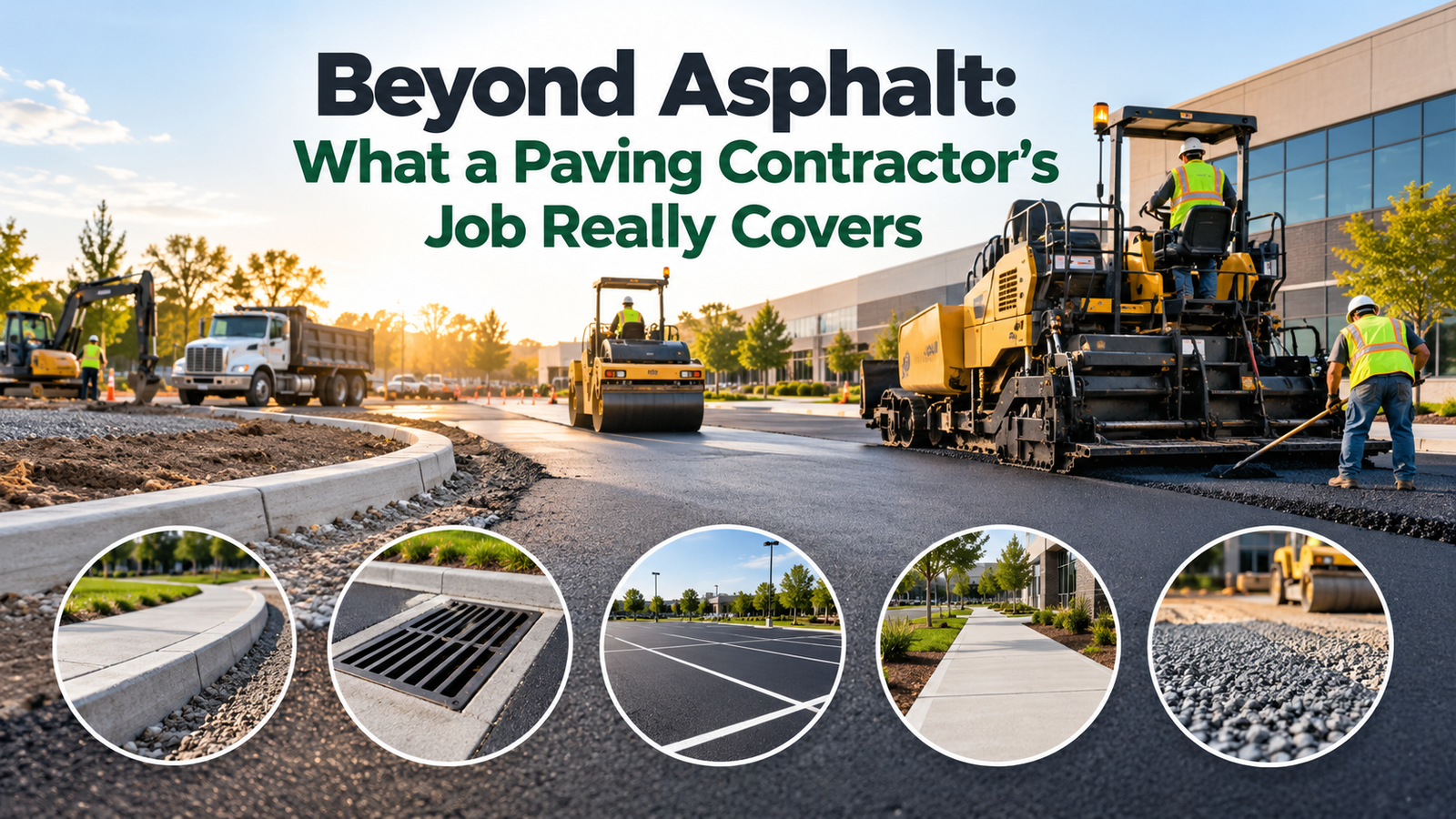
When most people think of a paving contractor, asphalt driveways come to mind first. But paving as a trade covers a much wider range of surfaces, materials, and project types, from gravel base work to concrete flatwork to specialty coatings used in commercial settings. For property owners in Midland weighing options for a driveway, parking area, or walkway, understanding the full scope of what Paving Contractor Midland handle helps clarify which material and approach actually fits a given project.
Paving Is a Category, Not a Single Material
“Paving” technically refers to the process of creating a hard, durable surface, and it applies to several distinct materials, each with different installation methods, costs of ownership over time, and appearance.
Asphalt is the most common choice for driveways and parking lots in this region due to its flexibility, relatively fast installation, and smooth, dark finish.
Concrete offers a rigid, long-lasting surface often used for sidewalks, patios, and driveways where a lighter color or decorative finish is desired.
Permeable pavement, whether permeable asphalt, pervious concrete, or interlocking pavers, allows water to filter through the surface rather than running off, which is increasingly relevant in areas managing stormwater runoff from new development.
Gravel and chip seal surfaces are lower-cost options sometimes used for longer driveways, rural access roads, or temporary surfaces, though they require more frequent maintenance than paved alternatives.
A paving contractor familiar with all of these materials can help match the right surface to the specific demands of a project, whether that’s heavy vehicle traffic, drainage requirements, or long-term durability expectations.
How Site Conditions Shape Material Choice
The suitability of a given paving material often comes down to what’s happening beneath the surface. Soil composition, water table depth, existing drainage patterns, and the slope of the property all influence which paving approach will hold up over time.
In areas with heavy clay soil, which is common throughout Cabarrus County, proper base preparation becomes especially critical regardless of which surface material is chosen. Clay expands when saturated and contracts as it dries, and a paving surface installed without adequate base depth and compaction is more likely to develop cracking or unevenness as the soil beneath shifts seasonally.
Slope also matters. A driveway on a steep grade may benefit from a rougher-textured surface for traction, while a level commercial lot has more flexibility in terms of finish but needs more attention to drainage design to avoid standing water across a larger, flatter area.
The General Paving Process Across Materials
While the specifics vary by material, most paving projects follow a similar general sequence:
- Site assessment, including evaluating soil type, existing drainage, and the intended use of the surface.
- Design and layout, determining dimensions, slope, and any transitions to existing structures like garages, sidewalks, or roadways.
- Excavation and grading, removing unsuitable material and shaping the subgrade to the correct slope.
- Base construction, typically compacted aggregate, which forms the structural foundation regardless of what surface material goes on top.
- Surface installation, whether that’s hot-mix asphalt, poured concrete, pavers, or another material.
- Finishing work, including edge treatment, joint work, and any final grading around the paved area.
- Curing or setting time, which varies significantly by material. Asphalt can typically handle light traffic within a day or two, while concrete generally needs several days to reach adequate strength before vehicle traffic and up to a month to fully cure.
Why Base Preparation Is the Common Thread
Regardless of the surface material selected, base preparation is consistently the factor that determines long-term performance. A well-compacted, properly graded base distributes weight evenly and manages water effectively, while a poorly prepared base will eventually cause problems on the surface above it, whether that surface is asphalt, concrete, or pavers.
This is why an experienced paving contractor spends a significant portion of project time on grading and base work rather than rushing to the more visible surface installation step. It’s also why two driveways that look similar when finished can perform very differently after a few years, depending on what was done, or not done, before the visible material went down.
Commercial vs. Residential Paving Considerations
Paving contractors often work across both residential and commercial projects, but the two come with different requirements.
Residential paving, like driveways, generally deals with lighter and less frequent traffic, smaller surface areas, and a greater emphasis on appearance alongside function. Commercial paving, such as parking lots, loading areas, or access roads, typically involves heavier vehicle loads, higher traffic volume, and stricter requirements around drainage, striping, and accessibility compliance, particularly for ADA-compliant parking and pathways.
Commercial projects also frequently require coordination with local permitting and inspection processes, since municipalities often have specific requirements for stormwater management and traffic flow on new commercial paving projects.
Signs a Paved Surface Needs Attention
Across all paving materials, a few general warning signs indicate that a surface may need maintenance or repair sooner rather than later:
- Standing water that doesn’t drain within a day or two after rain
- Cracking that widens or spreads over a period of months
- Noticeable settling or unevenness in specific areas
- Edges that are crumbling or separating from adjacent surfaces
- Visible aggregate showing through a worn asphalt surface
Catching these signs early generally allows for more limited, less invasive repairs, while ignoring them tends to lead to more extensive work later as underlying base issues worsen.
Maintenance Differences by Material
Different paving materials require different ongoing care to reach their expected lifespan.
Asphalt benefits from periodic sealcoating, generally every two to three years, along with prompt crack sealing to keep water from penetrating the surface and reaching the base below.
Concrete requires less frequent surface treatment but benefits from control joint maintenance and occasional sealing to reduce staining and surface scaling, particularly relevant in climates with freeze-thaw cycles.
Permeable surfaces need periodic cleaning or vacuuming to prevent the pores that allow water infiltration from becoming clogged with debris and sediment over time.
How Pavers and Interlocking Systems Fit Into the Picture
Beyond asphalt and poured concrete, interlocking pavers represent another paving category that a full-service paving contractor may work with, particularly for patios, walkways, or decorative driveway sections. Unlike asphalt or concrete, which are installed as a continuous surface, pavers are individual units set into a compacted base and sand or gravel setting bed, which allows them to shift slightly with ground movement rather than cracking the way a rigid or semi-rigid surface might.
This flexibility makes pavers a practical choice in areas with unstable soil or significant tree root activity nearby, since individual units can be lifted and reset if they become uneven, rather than requiring a full section replacement as would be the case with cracked concrete or asphalt. Pavers also offer a wide range of aesthetic options in terms of color, shape, and pattern, though they generally require more manual labor to install than machine-laid asphalt or poured concrete, which affects overall project timelines.
How Traffic Type Influences Long-Term Surface Selection
Different types of vehicle and foot traffic place different demands on a paved surface, and this is one of the more practical factors a paving contractor considers when helping a property owner choose between materials. A driveway used primarily by passenger vehicles has relatively modest structural requirements compared to a commercial lot regularly used by delivery trucks, waste collection vehicles, or other heavy equipment, all of which place concentrated point loads on pavement, particularly during turning.
Areas with frequent heavy vehicle traffic generally benefit from a more robust design, whether that means a thicker asphalt section, a higher-strength concrete mix, or additional base reinforcement, regardless of which surface material is ultimately selected. Ignoring these traffic considerations during the design phase is one of the more common reasons a paved surface underperforms relative to its expected lifespan, even when the installation itself was executed correctly for a lighter-duty application.
The Growing Role of Stormwater Regulations in Material Selection
As municipalities across the Charlotte metro region have updated stormwater management requirements to address increased runoff from ongoing development, paving material selection has started to factor in these regulatory considerations more than it did in past decades. Impervious surfaces like standard asphalt and concrete contribute to runoff volume, which can strain municipal drainage infrastructure and contribute to downstream flooding or erosion issues if not properly managed at the site level.
Permeable paving options, which allow water to filter through the surface into the ground below rather than running off entirely, have become an increasingly relevant option for commercial projects in particular, where local stormwater ordinances may require a certain percentage of a site’s impervious surface to be offset or managed through alternative drainage solutions. A paving contractor familiar with these evolving regulatory requirements can help property owners and developers understand which paving approaches will satisfy local permitting requirements for a given project, particularly for larger commercial developments where stormwater compliance is a standard part of the approval process.
How Site Size and Scale Influence Contractor Approach
The scale of a paving project, from a single residential driveway to a multi-acre commercial development, significantly influences how a contractor approaches planning, equipment selection, and scheduling. Smaller residential projects generally involve more compact equipment and shorter timelines, often completed within a day or two once site preparation is finished. Larger commercial or subdivision-scale projects, by contrast, typically require more extensive planning, larger equipment fleets, and often a phased approach where different sections of a site are paved in sequence as other construction work in those areas is completed.
This scale difference also affects how quality control is managed. On a small residential job, a single experienced crew member can often oversee every stage of the process directly, while larger projects generally require more formalized quality control checkpoints and documentation to ensure consistency across a much larger paved area, particularly when multiple crews may be working on different sections of a site simultaneously.
Why Existing Site History Affects New Paving Work
When paving over or replacing an existing surface, the history of that site, previous repairs, past drainage issues, or even old utility work, can meaningfully affect how a new project should be approached. A contractor evaluating a site with a history of recurring cracking in a specific area, for instance, may investigate whether that pattern points to an underlying soil or drainage issue that needs to be addressed before new paving is installed, rather than simply repeating the same installation approach that led to the original problem.
This kind of diagnostic thinking distinguishes a thorough paving evaluation from a purely cosmetic replacement. Property owners dealing with a driveway or lot that has failed prematurely in the past may find it useful to share that history with a contractor evaluating the site, since understanding what didn’t work previously often informs a better approach for the replacement project going forward.
Frequently Asked Questions
What’s the difference between a paving contractor and an asphalt contractor?
An asphalt contractor specializes specifically in asphalt installation and repair, while a paving contractor may work across multiple surface materials, including asphalt, concrete, and permeable pavement, depending on the scope of their business and the needs of a given project.
How do I know which paving material is right for my property?
The right choice depends on factors like soil composition, drainage, expected traffic load, and desired appearance. A site evaluation that considers all of these factors typically leads to a more informed decision than choosing based on appearance alone.
Does the base layer really need to be as thick for a driveway as for a parking lot?
Not necessarily. Base depth is generally determined by expected traffic load, so lighter residential traffic typically requires a thinner base than heavier commercial vehicle traffic, though soil conditions can also influence the required depth regardless of use.
Can permeable paving handle regular vehicle traffic?
Many permeable systems are engineered to support standard vehicle loads, though the specific design and material selection matter significantly, since not all permeable products are rated for the same traffic levels.
How long does newly poured concrete need before it can handle foot or vehicle traffic?
Concrete typically reaches enough strength for foot traffic within a few days and vehicle traffic within about a week, though it continues to gain strength for up to a month as it fully cures.
Understanding the range of paving materials and processes available helps property owners make more informed decisions about which approach best fits their site conditions and long-term goals. Learn more about paving services in the Midland area at https://www.victorypavingnc.com/midland/paving-contractor/.